

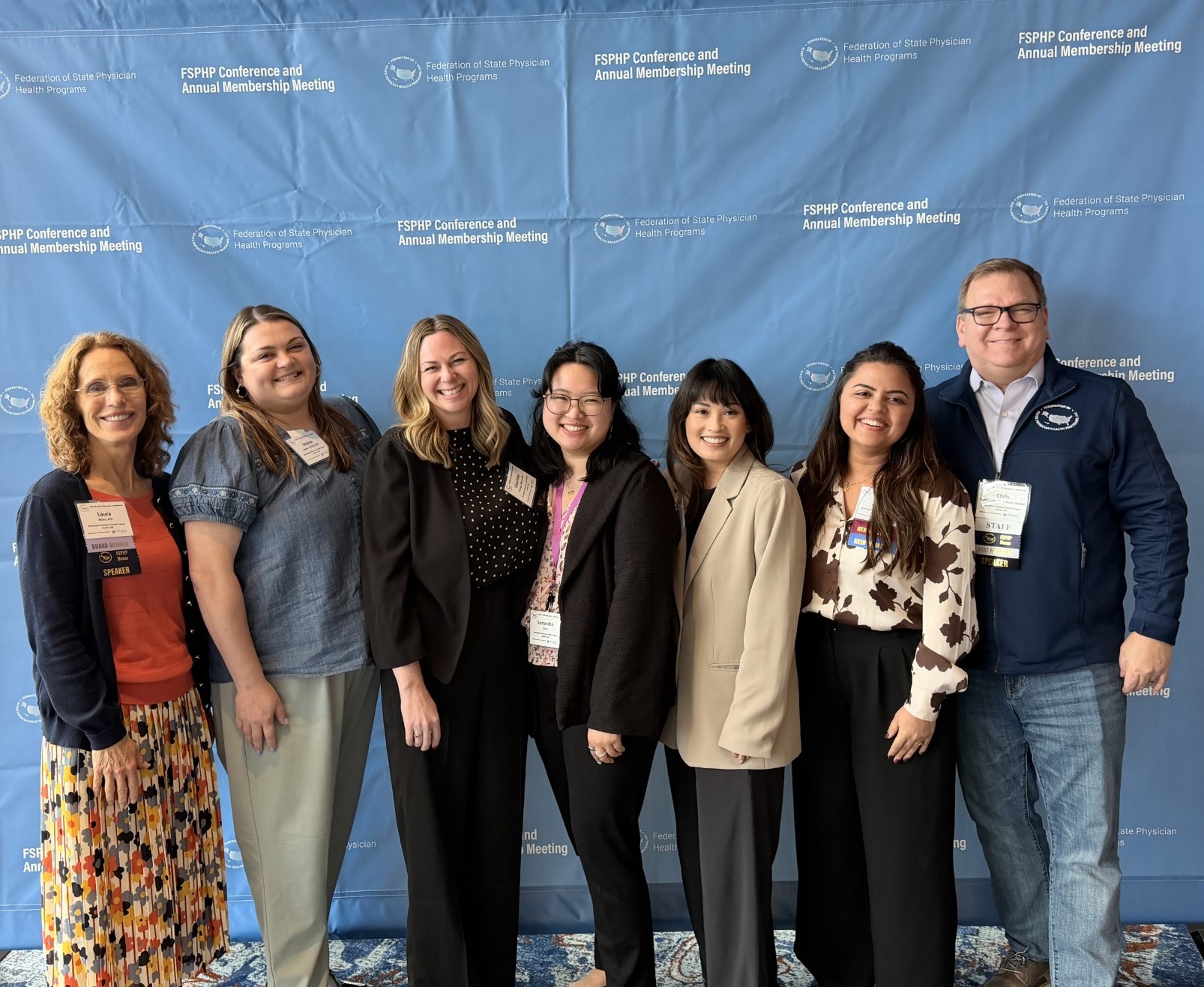
The Washington Physicians Health Program (WPHP) recently attended the 2026 Federation of State Physician Health Programs (FSPHP) Annual Education Conference, April 29 – May 2, in Baltimore, Md. During this four-day event, 75 presenters led over 25 sessions on topics most pertinent to supporting the well-being of the healthcare workforce. The conference was a valuable opportunity for WPHP to share our knowledge in addition to learning from and connecting with our colleagues.
During the opening session, Dr. Michael Baron, President of FSPHP and Medical Director of the Tennessee Medical Foundation, highlighted the strategic accomplishments that affirm FSPHP’s leadership in physician and professional health — expanding national visibility, strengthening partnerships, and advancing accreditation, research, education, and advocacy initiatives. Dr. Baron also emphasized that continued collaboration will shape the future of physician well-being.
New Insights into Evaluations and Recovery
Several sessions focused on new research in clinical care and best practices for health verification. Dr. Daryl Shorter, Medical Director of Addictions and Recovery Services at The Menninger Clinic, and Dr. Alton Bozeman, Assistant Professor of Psychiatry at Baylor College of Medicine and Director of Outpatient Assessments at The Menninger Clinic, examined innovations in evaluating impairment, advances in diagnostic assessment tools, and current debates regarding the ethics and utility of fitness-for-duty evaluations.
New treatments and models of care for substance use disorders have also developed in recent years. Dr. John Kelly, Elizabeth R. Spallin Professor of Psychiatry in Addiction Medicine at Harvard Medical School and Founder and Director of the Recovery Research Institute at the Massachusetts General Hospital, discussed evidence-based recovery support services at different points along the healing continuum that are shown to enhance resilience, remission, and recovery.
The Power of Collaboration
A recurrent theme throughout numerous sessions was the possibility for a stronger healthcare workforce when organizations work together. During the Federation of State Medical Boards (FSMB) and FSPHP Joint Session, Dr. Edwin Kim, President-Elect of FSPHP, presented on the triad of confidentiality and emphasized the importance of legislation that protects Physician Health Program (PHP) participants’ confidentiality. Dr. George Abraham, Chair of FSMB, recognized the importance of ongoing collaboration between FSMB and FSPHP and encouraged all state medical boards to enhance their confidentiality laws.
In partnership with IDAA leadership, Dr. Chris Bundy, Executive Medical Director of WPHP, and Courtney Strong, MA, LMHC, SUDP, Clinical Director of WPHP, outlined how collaboration with IDAA can benefit PHPs and their participants with a lifelong recovery community that can complement treatment and monitoring.
Addressing Increased PHP Difficulties
WPHP staff attended several sessions focused on the increased challenges and complexities that PHPs are experiencing. Dr. Cristina Feather, Director of Physician Wellness at Luminis Health, identified challenges that prevent physicians from seeking the support of a PHP and emphasized the value of collaborative relationships between health system leaders and PHPs. In another session, the Colorado Physician Health Program described their experience in caring for providers with disruptive behavior and recommended strategies for effective intervention.
During a workshop on neuropsychological and psychological evaluation in return-to-work recommendations, attendees from different professional backgrounds and PHPs analyzed complex, challenging case examples and discussed how they would handle the scenarios. This was a meaningful opportunity to share unique perspectives and strategies.
Learning From Each Other
In line with the conference theme of “Navigating Change: Challenges, Solutions, and Success,” many sessions involved PHPs of various sizes and structures sharing what approaches and strategies work best for their organization. Dr. Bundy, alongside representatives from the Colorado Physician Health Program, Georgia Professionals Health Program, and Alabama Professionals Health Program, explored toxicology testing frequency and duration of monitoring agreements. The panel then evaluated the case for standardization of practice among PHPs as it relates to advancing accountability, consistency, and excellence. In another session, Dr. Jenny Melamed and Dr. E. Maire Durnin-Goodman of Precision Medical Monitoring examined the absence of monitoring and accountability standards for Canadian PHPs and how parameters used by other PHPs could be adopted.
Dr. Laura Moss, Associate Medical Director of WPHP, and representatives from the North Carolina Professionals Health Program, Florida Professionals Resource Network, and Iowa Physician Health Program, shared suicide prevention and postvention practices, focusing on ways to maximize impact based on a PHP’s available resources. In a poster presentation, Dr. Bundy shared WPHP’s method for surveying program participants and stakeholders and how the data can be interpreted to make program improvements and enhance education and outreach efforts.
The Impact of Storytelling
Dr. Michael Kaufmann, Emeritus Medical Director of the Ontario Medical Association Physician Health Program, participated in a fireside chat to discuss his book entitled “Drugs, Lies & Docs: A doctor’s memoir of addiction, recovery and more.” Using his stories and themes, Dr. Kaufmann examined how recovery narratives can teach, reduce stigma, and build connection while also exploring storytelling risks, ethical guardrails, considerations for current vs. completed PHP participants, informed consent, privacy, and more. He encouraged PHPs to integrate recovery narratives into their education efforts because sharing honest stories about addiction and recovery is the most powerful way to reach those suffering and help them break through to long-term wellness.
Dr. Moss Receives FSPHP Award
Dr. Moss was presented with the FSPHP Board of Directors Service Award at the opening session. This award recognizes her significant contributions to FSPHP’s leadership and future direction during the 2024-2026 term.
WPHP is deeply grateful for this opportunity to connect with fellow PHPs and physician health experts while exchanging best practices, knowledge, and insights. Collaboration and partnership amongst members of the physician health world will continue to be essential in creating a healthier healthcare workforce.
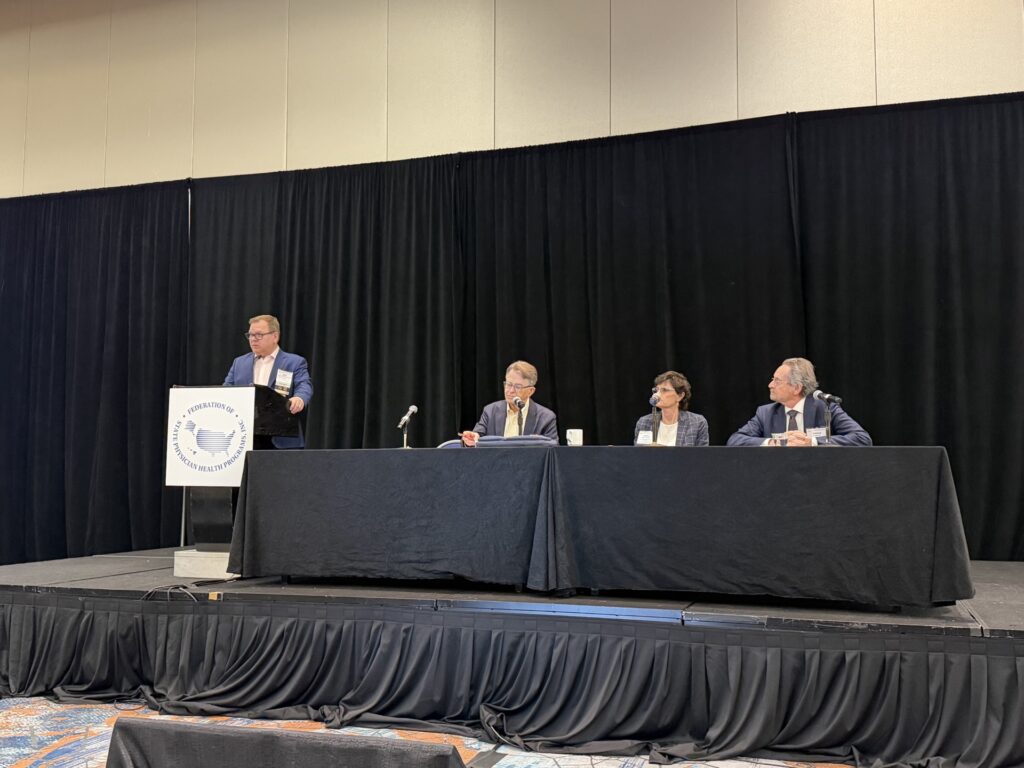
(Left to right): Dr. Chris Bundy; Dr. Paul Earley, Medical Director Emeritus of the Georgia Professionals Health Program; Dr. Sandra Frazier, Medical Director of the Alabama Professionals Health Program; and Dr. Michael Gendel, Medical Director Emeritus of the Colorado Physician Health Program, present “Advancing Accountability, Consistency, and Excellence in PHP Monitoring Practices.”
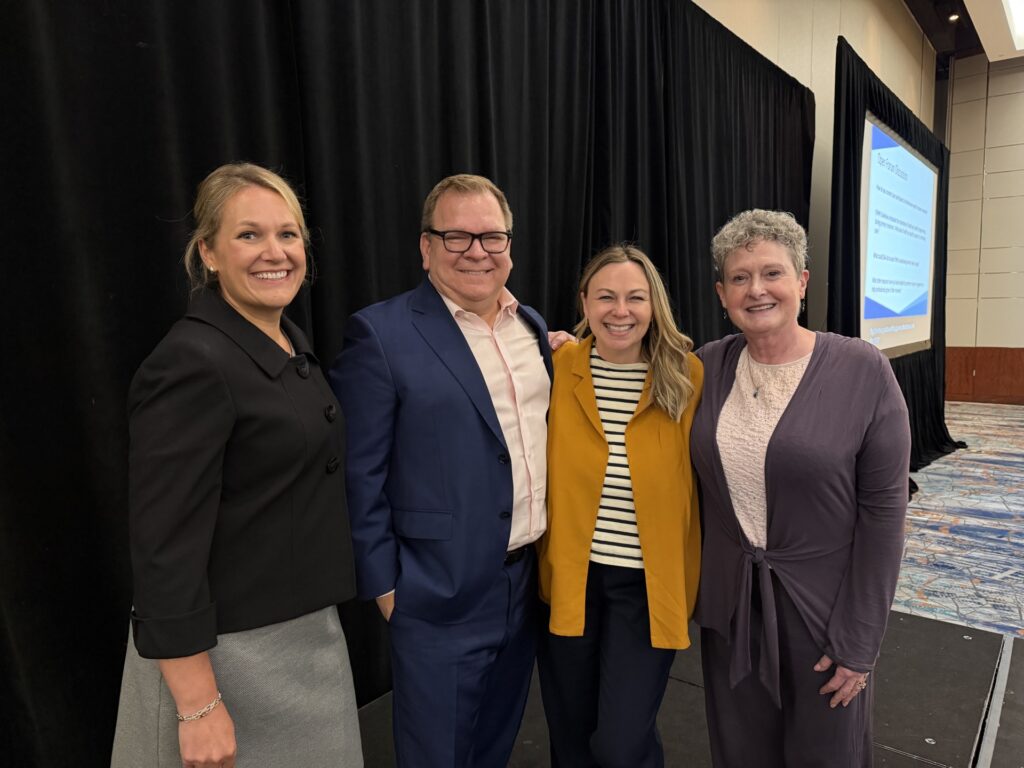
(Left to right): Michelle Van Alst, IDAA Executive Director; Dr. Chris Bundy; Courtney Strong, MA, LMHC, SUDP; and Dr. Melissa Warner, Director of Professionals Programming at The Farley Center, after presenting “Beyond Compliance: Strategies to Deepen and Sustain Recovery Engagement for the Monitored Health Professional.” Not pictured: Dr. Jeffrey Wesolowski, IDAA Board Member.
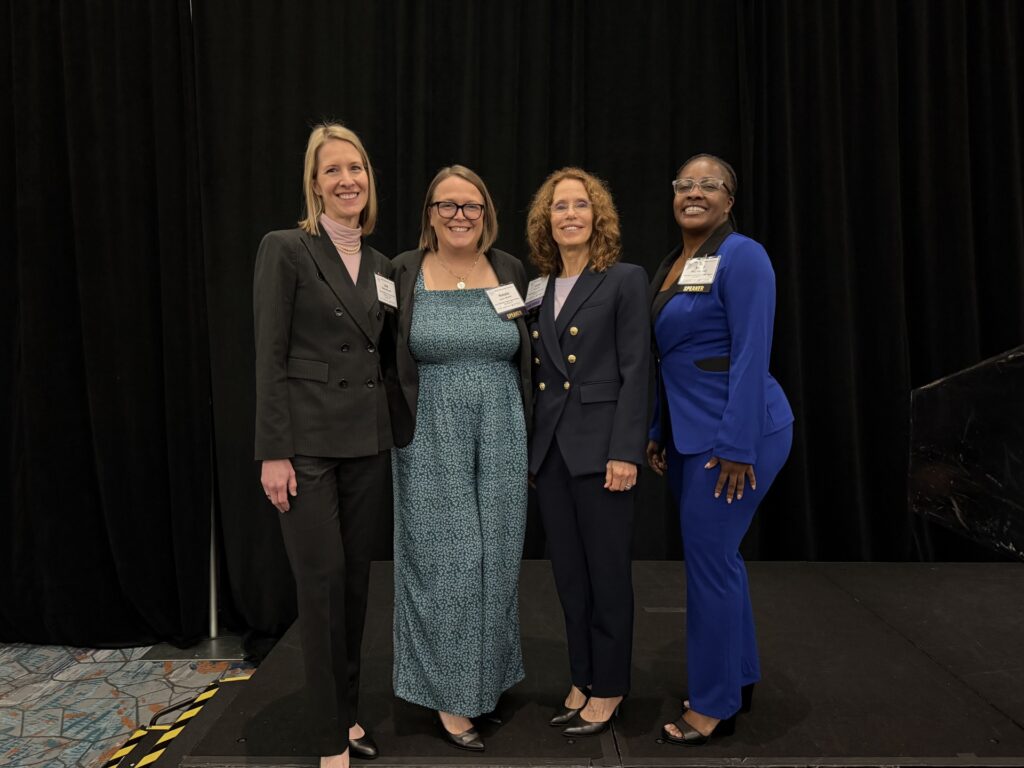
(Left to right): Dr. Lisa Merlo, Director of Research at the Professionals Resource Network; Natalie Lyons, BS, IADC, Program Coordinator of the Iowa Physician Health Program; Dr. Laura Moss; and Emily King, MHS, PA-C, Assistant Medical Director of the North Carolina Professionals Health Program, after presenting “Best Practices in Suicide Prevention and Postvention for PHPs.”
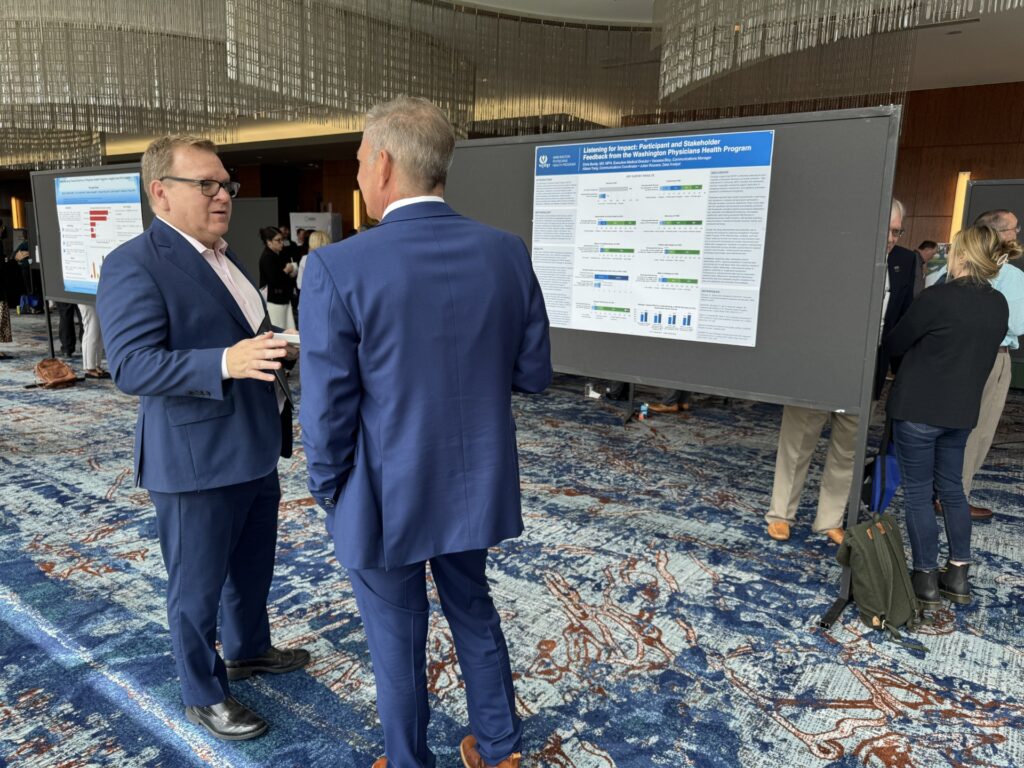
Dr. Chris Bundy presents “Listening for Impact: Participant and Stakeholder Feedback from WPHP.”
Quick Links