

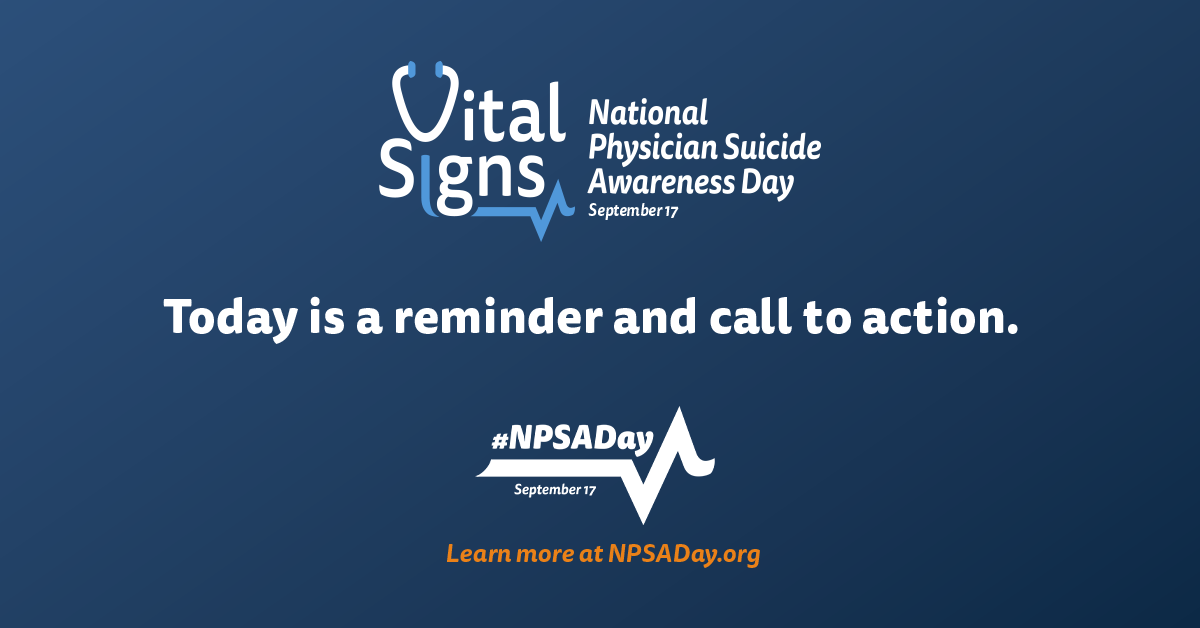
Coinciding with National Suicide Prevention Month, National Physician Suicide Awareness Day is observed annually on September 17th to remember the physicians we have lost, support those who may be struggling, and bring awareness to the underlying barriers to mental health care in the medical community. The Washington Physicians Health Program (WPHP) is committed to destigmatizing help-seeking for healthcare professionals and taking proactive steps to support our healers.
WPHP encourages you to explore the valuable suicide prevention resources below, whether you are a physician yourself or concerned about a colleague or loved one. Hope is real, and help is within reach.
Vital Signs: The Campaign to Prevent Physician Suicide
The Physicians Foundation and the Dr. Lorna Breen Foundation developed a seven-step action plan to help reduce physician burnout and ensure physicians’ struggles do not become mental health emergencies. The seven actions include:
- Learn the vital signs
- Encourage mental health reflection
- Share suicide prevention resources
- Prepare before a moment in crisis
- Check in with a physician
- Remove intrusive mental health questions
- Create a culture of wellbeing
View action plan to learn more
Preventing Physician Suicide: Identify and Support At-Risk Physicians Toolkit
The American Medical Association created a toolkit to help identify risk factors and warning signs for suicide among physicians. It outlines how to build an environment of support in a medical practice and simplify the process of receiving support. Dr. Chris Bundy, Executive Medical Director of WPHP, contributed his expertise to the toolkit.
The four steps to identify and support at-risk physicians are:
- Identify suicide risk factors and warning signs
- Promote care-seeking behaviors
- Train a physician advocate
- Make it easy to get help
Guidelines for Ethically Communicating about Suicide
The American Foundation for Suicide Prevention (AFSP) has detailed how to report safely and accurately about suicide to avoid sensationalizing suicide and inadvertently increasing risk.
AFSP’s guidelines for ethically reporting on suicide include:
- Language: Use terminology that is not moralistic and better aligns suicide with other health conditions and decreases negative attitudes of mental health conditions.
- Causes: Avoid reporting that a suicide death was caused by a single event since research shows no one takes their life for a single reason, but rather a combination of factors.
- Magnitude: Do not refer to suicide as an “epidemic,” or “skyrocketing” as this language has shown to cause contagion. Instead, refer to suicide as a solvable and preventable public health issue.
- Hope and Help: Research tells us that showing that help is available and recovery is possible can not only lessen the risk of contagion but also encourage people to seek help. Include hopeful messages for the public that support and treatment are available for mental health conditions.
View full list of guidelines to learn more
The Role of Physician Health Programs in Suicide Prevention Webinar
This webinar recognizes the mental health challenges faced by healthcare workers, discusses the effectiveness of physician health programs in reducing suicide risk and improving the well-being of physicians, and shares high-impact prevention strategies and responsible communication guidelines when discussing suicide in healthcare settings.
Dr. Chris Bundy, Executive Medical Director of WPHP and Chief Medical Officer of the Federation of State Physician Health Programs (FSPHP), Dr. Christine Yu Moutier, Chief Medical Officer of AFSP, and Dr. Michael Baron, Medical Director of the Tennessee Medical Foundation and Immediate Past President of FSPHP, lead this important discussion.
What is WPHP Doing About Physician Suicide?
This article featured in the Washington Medical Commission’s quarterly newsletter details WPHP’s ongoing work to address physician suicide through suicide risk assessment and management protocols, education, and advocacy.
FSPHP Physician Suicide Prevention Resources
FSPHP has compiled relevant articles, publications, videos, and resources to support the prevention of physician suicide and assist with educational outreach.
Crisis Hotlines
- 988 Suicide & Crisis Lifeline: Call or text 988 or visit 988lifeline.org
- Physician Support Line: Call 1-888-409-0141 or visit physiciansupportline.com
- NAMI HelpLine: Call 1-800-950-NAMI (6264), text “NAMI” to 62640, email helpline@nami.org, or visit nami.org/nami-helpline
Quick Links