

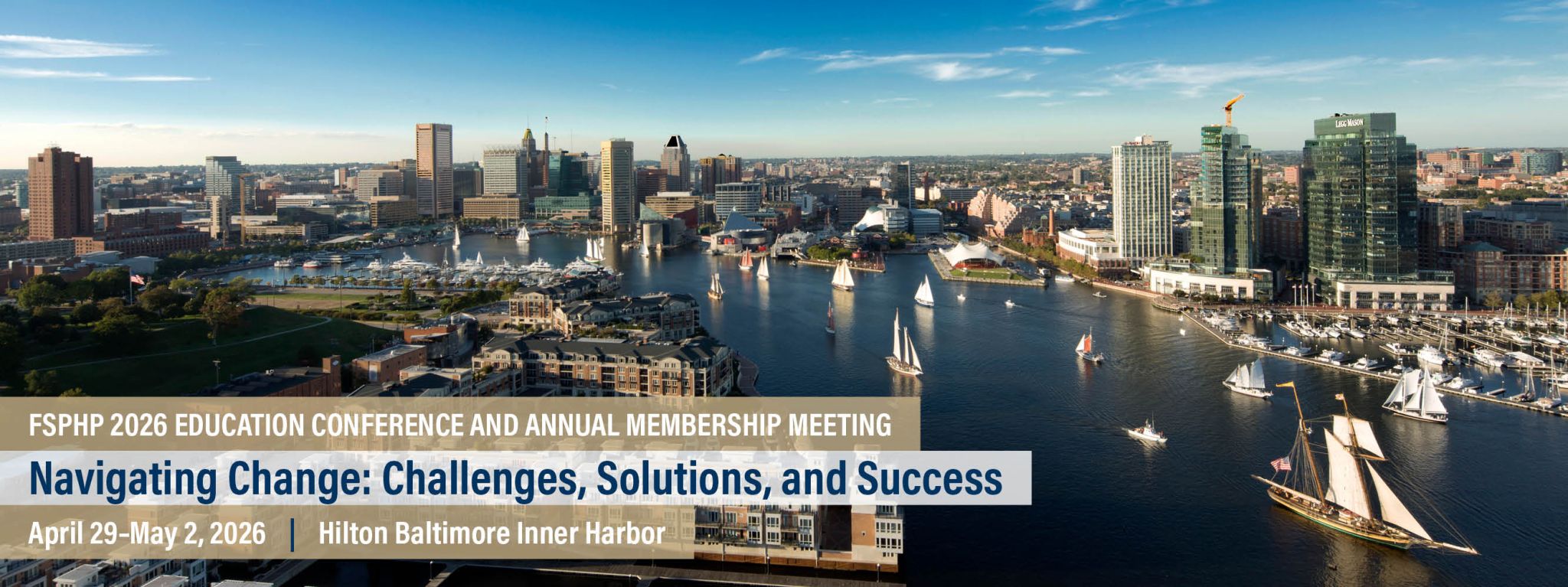
The Washington Physicians Health Program (WPHP) is attending the 2026 Federation of State Physician Health Programs (FSPHP) Annual Education Conference this week in Baltimore, Md. During this four-day conference, Physician Health Program (PHP) employees, healthcare leaders, physicians, and stakeholders from across the country will gather to discuss best practices and address challenges regarding the well-being of the healthcare workforce. The event features 25+ sessions on the conference theme, “Navigating Change: Challenges, Solutions, and Success,” four of which will be presented by WPHP staff members. Learn more about these sessions below:
Beyond Compliance: Strategies to Deepen and Sustain Recovery Engagement for the Monitored Health Professional
Featuring Chris Bundy, MD, MPH, WPHP Executive Medical Director, and Courtney Strong, MA, LMHC, SUDP, WPHP Clinical Director, this session offers multiple perspectives on practical strategies to promote active participation in recovery activities beginning in primary treatment and continuing throughout the recovery journey. Michelle Van Alst, IDAA Executive Director; Jeffrey Wesolowski, MD, MHSA, FACR, IDAA Board Member; and Melissa Warner, MD, FASAM, DABAM, Director of Professionals Programming at The Farley Center, will also join the session to outline how collaboration with IDAA can benefit PHPs and their participants with a lifelong recovery community that can complement treatment and monitoring. Read more about this session here.
Listening for Impact: Participant and Stakeholder Feedback from WPHP
In this poster presentation, Dr. Bundy will discuss key results from comprehensive annual and exit surveys that measure outcomes and experiences as reported by WPHP participants and stakeholders. Examination of this data suggests that transparent, structured feedback builds credibility, guides quality improvement, and strengthens trust among participants and stakeholders. Measuring and disseminating data that underscores program benefits can enhance education and outreach efforts aimed at increasing awareness, confidence, and utilization of program services. Read more about this session here.
Advancing Accountability, Consistency, and Excellence in PHP Monitoring Practices
Results from the FSPHP National PHP Services Survey show that toxicology testing frequency and duration of monitoring agreements vary substantially among PHPs. Variation arises from legitimate factors, participant risks, diagnoses, settings, and state legal environments, but also from program culture, legacy habits, and resource constraints. Health services research shows that unwarranted variation undermines reliability and trust; aligning to agreed upon standards, where possible, improves consistency and outcomes while preserving room for clinical judgment.
This interactive panel gathers leaders from PHPs of different sizes and structures (Dr. Bundy; Michael Gendel, MD, Medical Director Emeritus of the Colorado Physician Health Program; Paul Earley, MD, DFASAM, Medical Director Emeritus of the Georgia Professionals Health Program; and Sandra Frazier, MD, Medical Director of the Alabama Professionals Health Program) to explore factors driving practice variation along these two key monitoring parameters. Live polling and audience Q&A will be used to assess attendees’ attitudes regarding standardization vs. individualization and explore barriers to harmonization. Read more about this session here.
Best Practices in Suicide Prevention and Postvention for PHPs
This session will present results from a recent national survey of PHP suicide screening and postvention practices, highlighting areas of consistent practice and opportunities for further development. It will also review the suicide risk mitigation criteria in the FSPHP Performance Enhancement and Effectiveness Review™ assessment. Laura Moss, MD, WPHP Associate Medical Director, and fellow panelists (Emily King, MHS, PA-C, Assistant Medical Director of the North Carolina Professionals Health Program; Lisa Merlo, PhD, MPE, Director of Research at the Professionals Resource Network; and Natalie Lyons, BS, IADC, Program Coordinator of the Iowa Physician Health Program) will share examples of suicide prevention and postvention practices in PHPs of varying sizes and structures, focusing on ways to maximize impact based on available resources. Read more about this session here.
WPHP looks forward to sharing our knowledge as well as learning from and connecting with our colleagues nationwide to advance the health and well-being of the medical community.
Quick Links